Bury and burn the treasure: or, why politicians don't "follow the science."

One source of bewilderment for climate advocacy in the twenty-first century is the stubborn interval, the hiatus—the chink—between fact and act. Careful sifting and milling of facts for half a century has not triggered transformational change. One of the frequent demands climate advocacy makes is to “follow the science” but as Hamlet could have told us and as politicians, marketers and climate deniers have long shown, information is not motivation.
Climate denial and climate dithering persist in Australia in part because people cannot imagine modernity without fossil fuels. All the modelling in the world cannot alter this for the straightforward reason that modernity has never existed without them. Like suppressed shame, climate denial muscles its way into modernity’s collective psyche to ask confronting questions: what if the injunction to “follow the science” is a curtain veiling the truths about our society that we ourselves would rather deny?
One source of the hiatus between fact and act begins in the origins of the modern world in the seventeenth century. In the works and disputes of two Englishmen, Robert Boyle the scientist and Thomas Hobbes the political philosopher, lay “the invention of Society distinct from Nature, the one peopled with subjects, the other cluttered with objects,” wrote Bruno Latour. Politics and science were conceived as wholly distinct spheres – one the realm of knowledge and nature (facts), the other of power and society (acts). Each developed different procedures for their work. Establishing facts means separating things from their relationships with other things, isolating their properties in the laboratory. Political acts, on the other hand, are almost always the products of relationships: relationships of obligation, influence, conflict, responsibility and, of course, power.
The separation of these spheres was recently reiterated by Professor Ulf Büntgen in Nature, in an article urging scientists not to get involved in activism and politics. Prof Büntgen wrote:
“even a clear-cut case like anthropogenically-induced global climate change does not justify the deviation from long-lasting scientific standards, which have distinguished the academic world from socio-economic and political spheres.”
What science has purported to do since Boyle is give testimony on the world’s behalf. It has until recently claimed to be the only credible testimony and the idea maintains a powerful hold on climate advocacy. The testimony of artists, First Nations people and kids, for example, are allowed as a novelty, but not treated as seriously as rational science. The world itself is mute. Its forests, oceans and glaciers testify only through the procedures of the empirical process.
Knowledge derived via the scientific method requires distance. The eye does not see itself. A controlled experiment, or a computer model, is a diorama, observed by its maker from beyond its boundaries. In other words, the figure of the scientist is made to stand outside the world she observes and on which she reports. The epistemological foundation of modern science thereby reproduces the very estrangement from the world that is the reason why we are not “listening to the science.”
The facts produced by the scientific method, and by the modelling machines of economists and other experts, purport to be independent. They thus obscure both the free agency and the interdependence that characterises every part of our beautiful turning world. When a climate activist says, “follow the science” what she really means is “protect the dreams of children,” “treat the plants, soils and waters that gives us life with respect,” “stop being greedy or there will be trouble,” but speaking like this is taboo, so she cites numbers and percentages.
Stop being greedy or there will be trouble. The longest lasting stories tend to be about sharing protocols. Be hospitable to strangers. Don’t take more than your portion. See that old pelican? He got that big beak as punishment for being greedy. The oldest tale of the English-speaking people is Beowulf, which inducts its readers into the sharing protocols of the early medieval Anglo-Saxons with its ring-gifts, portions of bounty and unmistakable warnings about the deranging influence of wealth. The second half of the poem tells how, long ago, the last survivor of a forgotten people buried a hoard of treasure in a barrow below the earth:
“Now, earth, hold what earls once held
and heroes can no more; it was mined from you first…”
A dragon found and took possession of the hoard. It is wakened by a thief from three centuries of slumber and begins to terrorise the countryside. Beowulf, king of the Geats, fights the dragon, and kills it, but is mortally wounded. His people bury and burn him in a barrow, and a trove of the treasure with him, the grimly-got gold, “gone to earth, as useless to men now as it ever was.” We don’t tend to talk about or treat treasure like that these days.
The old stories tell people how to conduct themselves to keep the world in balance. In contrast, climate advocacy flounders when it insists that acts must follow facts without a cohering story about the good life. It also misprises what fossil fuel executives and climate deniers are saying. When a mining boss cites the number of people they employ, it is not facts that are being conveyed, but a story about relationships. They are saying, These people and their families depend on us and I will abandon them if I don't get what I want. They articulate our society’s lopsided protocols (those who accumulate the most gold dictate the actions of those who lack it and have no reciprocal obligations) and deepen its blindspot for our interdependence with rivers, soils, oceans and life.
Michel Serres wrote in The Natural Contract about the seagoing pact: sailors in all eras understood that social relations are essential while together at sea. Since opting-out is impossible, peace must be kept. Inhospitable chaos roils beyond the gunwales so, for sailors, to fight amongst themselves risks their annihilation: “the collectivity, if sundered, immediately exposes itself to the destruction of its fragile niche, with no possibility of recourse or retreat.” Serres observed that in becoming global, society became more like a ship. In a globalised society of exchange, our collectivity is fragile, total and interdependent. And yet, this interdependence is obscured by power. The rich use money to control the world around them. They boast and call this “independence” but remain wholly dependent on a social system that remains wholly dependent on the turning natural processes of water, life and earth.
None of these flaws can be altered with facts alone because action needs motive. Without a compelling new/old story about sharing and relating to the world, climate advocacy reproduces the reductive values of the dominant paradigm which, since Hobbes, has imagined self-interest to be at the centre of politics and economics. This story says “People are greedy” and stops there without showing how social and cultural protocols protect against the trouble that greed brings. Greed and self-interest isn’t all there is to people. There are motives rising from love, solidarity, pride, curiosity and compassion, but getting stuck on facts has left climate activism trading dismally on self-interest as a prime motivator. Hence, “marginal seats campaigns” and briefing papers about production tax credits.
The science/politics double vision of modernity imagines nature as absolutely separate from society, but simultaneously within society’s control. It imagines society as wholly our own creation, not at all “natural,” but simultaneously inexorable and transcendent – beyond our control. This is how ephemeral commercial interests come to seem intractable in climate policy while the “facts” of science, like the probability of breakdown of the Antarctic circumpolar current, seem like something inessential that can surely be fixed later.
For several generations, this nature-society double-vision was a source of modernity’s apparently limitless energy and growth. Now that the tide is receding, it paralyses us. Nature has processes we cannot control yet is wholly within our power and unable to “save” itself. Society, “the system,” on the other hand, requires constant maintenance and renewal in the form of “growth” and “productivity,” yet seems to us unassailable, as if we cannot renew it in the manner we would choose.
Last year, a minor scandal erupted in activist circles when a respected academic with decades of experience in climate and energy policy remarked publicly that a greenhouse gas emissions reduction target of 65% below 2005 levels by 2025 would be an ambitious goal for Australia. The challenge of reaching such a goal, he said, was “formidable.” Common sense says this is true, but for climate advocacy it means confronting choices. The models say that a rich country like Australia must decarbonise more swiftly than that to contribute a fair share of a general effort towards stabilising global warming at 1.5 degrees above pre-industrial levels. Models have even been assembled to show that Australia can decarbonise this radically and continue eating its modern consumerist banquet. Deploying such models allows climate advocacy to deny what the collective unconscious knows to be true. The way we live is not fair or good and there will be a terrible price to pay.
One of the things that will have to happen if there’s to be any stabilisation of global average temperatures is that everyone everywhere will have to stop burning fossil fuels. It’s generally known that preventing warming spiralling beyond our control means stopping fossil fuel burning in time to keep global average warming well below two degrees and that we’ll all have a better chance if we keep warming at 1.5 degrees in the long-term. That would mean countries like Australia not using or exporting coal any more in about five years’ time, give or take, and gas use also falling.
Imagine a large table laden with a banquet of many courses (actually, there are at least 20 large tables holding up feasts, but let’s keep it simple for now, and just think about Australia). Many guests are seated at the table and new and more opulent dishes keep on being served. This is our society, made possible by fossil fuels: plastics for packaging, hygiene and cheap entertainment; coal for making cement and steel for housing, schools and glittering skyscrapers, or for selling to others, so we can have money to buy imported goods; gas for making paints, glues, cosmetics and fertilisers; oil for transporting people and things around the world at whim; and the livelihoods of everyone intertwined with this economy. “Phase out fossil fuels” means you must whisk the cloth out from under the banquet while leaving the carafes, tureens, goblets and candelabras just as they are. The guests are sceptical it can be done without their dinner being disrupted or sauce being spilt on their nice clothes. They are absolutely right to be sceptical about this and no amount of modelling is going to magic away this common sense.
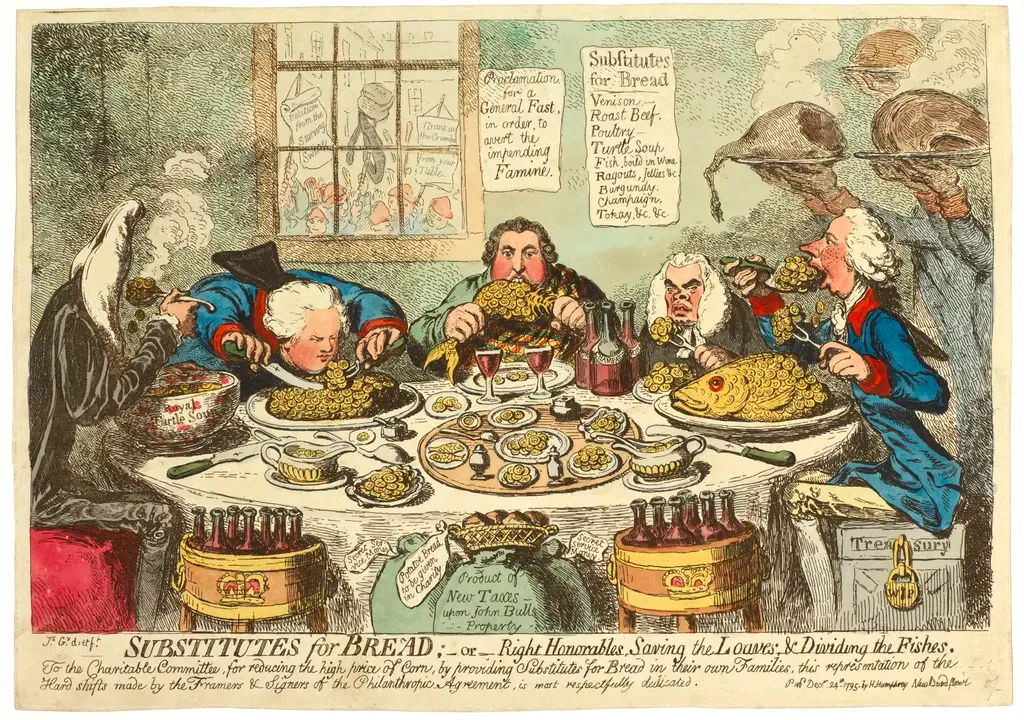
Inequality, domination and exploitation are being continually reproduced, materially and culturally. Think of the opaque and wasteful global trade that keeps fish arriving fresh at the banquet. For it to keep working, the system must be tended continually. Fish must keep being hauled out of their relationships in local habitats and into the supply chain. Energy must be continually expended to keep them fresh and move them around the world. Debt pours into every node in the network, intensifying its relationships of interdependence. Every link in the chain is brittle and vulnerable while also being inexorable and unyielding. It could fall over at any moment: it seems impossible to dismantle it. No one will get the work of dismantling it underway because some modelling has told them it is possible!
But they might do it for love.
All the while, as scientists have been patiently sifting, milling and presenting the facts of climate change and advocates have been reproducing these facts in briefing papers, slide shows and speeches, politics has continued working by its own procedures – negotiation, relationship and mediation. Mediation is how the Paris Agreement came into being and has produced every Australian attempt to respond to climate change in the last quarter of a century.
Recognising this will help to make our stuck situation more fluid.
Until now, the terms of the mediation have been stacked impossibly against the things that mean the most to me: the wild, free world of rivers, forests, oceans and wetlands. They’ve also been stacked against First Nations people and cultures, against small island people in the Pacific, against children, against the autonomy of rural communities to decide for themselves whether they want industrial development and against the workers whose livelihoods depend on fossil fuel production and use.
These inequities are a consequence of the mediations of politics being constituted in a framework that uses rationalism as a curtain to disguise its nature, its motives of domination and greed. I am writing this because I am not prepared to let what I love be destroyed and denigrated because values I do not share cannot be questioned and confronted. If we want our beloveds to survive, we are going to have to interrupt the banquet.