Signal fire
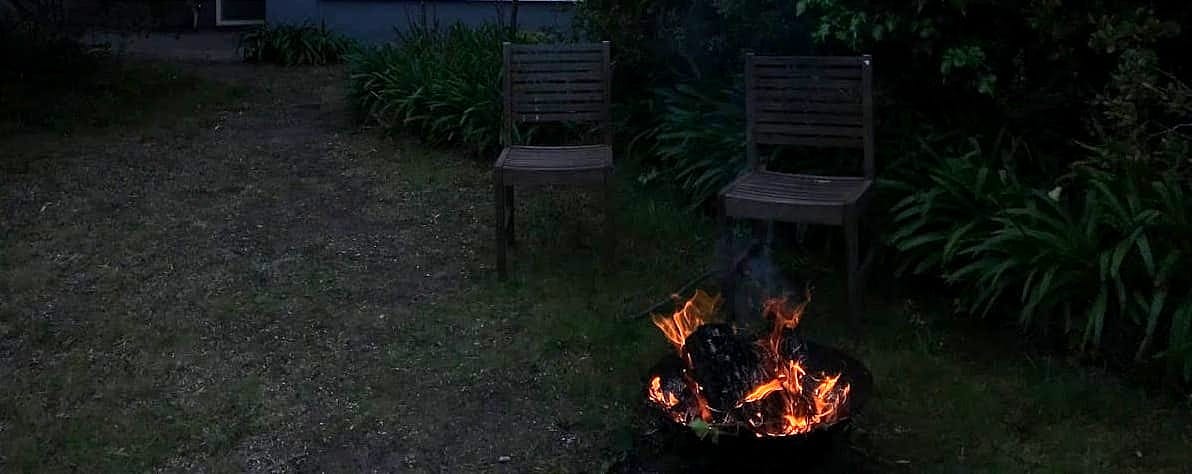
Two related problems caught fire in me when forests I love burned in the Black Summer, six years ago now. I began this newsletter in part to explore these problems and am grateful to you all for your interest. Though the newsletter has been sporadic, as the year ends, I'm still thinking about these preoccupations. I hope you find it helpful. Peace and love to all.
—
In our confrontation with climate change, we confront ourselves, personally and collectively. We are confronted by a dilemma of action: why bother, if my action makes no difference? This dilemma is particular to the modern sensibility – you do not hear it in First Nations cultures, nor is it present in un- or anti-modern art. It is nurtured by modernity’s excessive self-consciousness but at root is a crisis of intelligibility. Until we understand why we are hurtling (knowingly! willingly!) into this havoc each possible action to amend, turn, prevent, falters in uncertainty because each, alone, seems futile. Action without shared story feels haphazard and isolated.
This is why the most urgent matters to address are those that revive or renew community – making community through shared artistic expression and, relatedly, reimagining politics and society as creative acts of the whole community. The first makes space for the second.
In what follows, I explore governance and art through some of the news of 2025, detouring via a parable of the IPCC. As we turn again into a new year, this is one signal fire transmitting the story that turns anguish to action.
Why we need collective governance
In July this year, the Federal Court delivered its judgment in Pabai v Commonwealth of Australia.
Two Elders of the Torres Strait, on behalf of their communities, sued the Australian Government under common law for the harm being done to their island homes, their people, their culture, by climate change. They argued the Australian Government had a duty to Torres Strait Islanders to adopt responses to climate change that conformed to “best available science.” The Commonwealth of Australia actively fought the Islanders' case but largely agreed on the facts. Indeed, the Court described the facts of climate change as “ineluctable” – irresistible. The facts of climate change, its causes and its harms were also uncontested in the Sharma case and its appeal in which the Government fought a cohort acting on behalf of the children of Australia. The facts are established. What should be done about the facts, said the Pabai judgment, quoting the government, is a matter of “high policy” – properly the realm of the parliament and executive government.
This echoes the court’s judgment in the Sharma appeal:
“To the extent that the evidence and the uncontested risks of climate catastrophe call forth a duty of the Minister or the Executive of the Commonwealth, it is a political duty: to the people of Australia.”
Both judgments cited "the relationship between the governing and the governed in a democratic polity" and found that while climate change is real and terrible, responsibility for addressing it rests with the political architecture of our society. Uncle Pabai Pabai and Uncle Paul Kabai have appealed, but their case has already illuminated this truth for the rest of us: our governments will repeatedly fight Australian citizens in the courts to keep their prerogative over climate action.
The National Climate Risk Assessment was also released this year and its technical report on governance illuminated a related truth:
“Engagement and participation in decision-making are critical for effective governance, especially when addressing complex issues like climate change. Sustained and comprehensive community involvement is essential, extending beyond limited consultation periods.”
We do not have these essential things in Australia. As Bookchin identified decades ago, the relationship between the governing and the governed in our democratic polity, the way we practice it, assumes that the public is not competent to deal with issues of “high policy” either – that it is the domain of professional politicians and institutional administrators. Having variously pursued electioneering, court cases, lobbying, submission writing, public meetings and even direct action, it's fair to say that the citizens of Australia have tried to be involved in action on climate change, but have been rebuffed.
Climate advocacy has neglected these questions of governance and its role in responses to climate change. What machines to build and how to get enough money to build and generate profit from them has been the fixation of climate policy in Australia for a generation. Answering a much more fundamental question: how to organise society to make good, fair and shared decisions has been deferred or ignored in our haste. Indeed, participation has been stripped so that the machines and the money are not hindered by the public.
The modern nation state is an invention only as old as the steam engine itself. The Pabai case showed that the promise the state makes to its citizens – you may go about your lives and leave the governing to professionals elected every few years – is broken. The covenant is breached and to make sense of our path, we need new forms of self-organising governance.
Detour: a parable of the IPCC
Many years ago, before you were born, signs began to emerge that the spirits of the sky, the sea and the land were unsettled. The signs were subtle. A storm of unusual strength, the early arrival of blossoms, a diminishment of crabs.
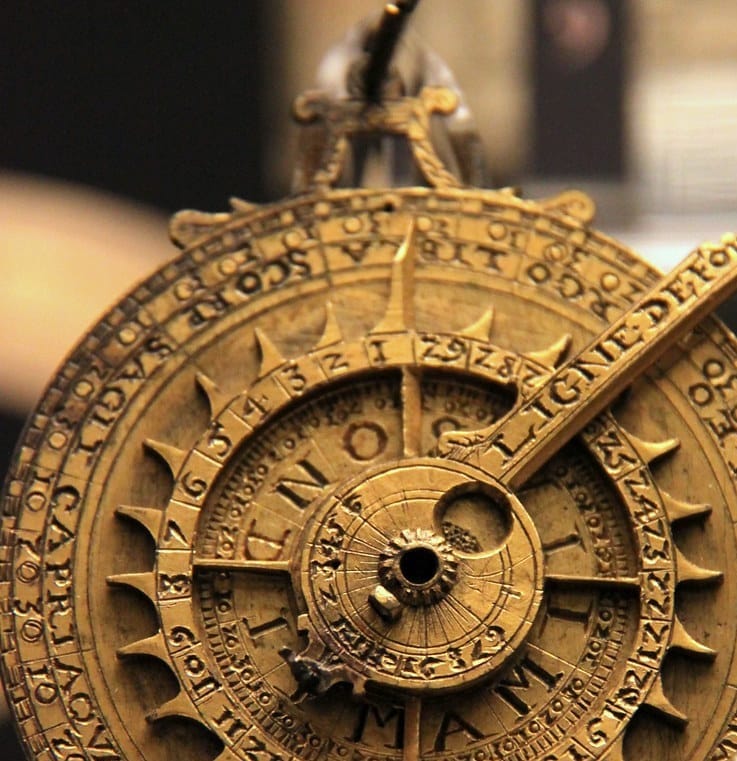
For seven years, a thousand sages from every land worked together to build a device to mimic the four great cycles of the world – the heavens, seas and lands and the vast frozen poles – to help them read these signs. They set the device moving and the thousand sages began the work of interpretation of the signs. The prophecies they wrote were as divers as the sages themselves.
Sages with rivalrous dispositions said, the device shows great advantage for our people!
Sages with mechanical genius said, the device shows many new machines must be built!
Those who longed for glory saw war in the oracles.
Those who longed for riches saw gold.
Those who loved saw grief.
Six cycles of seven years of device-building and prophesy passed while the lands became hotter, ice loosened and the people became more fractious. Because, you see, the device was only a replica of the skies, seas, lands and ice. It was beautiful, but it was not magical. It could not tell the sages nor their masters more than what they already knew, and it could not tell them what to do. It showed them the world in the guise they had built it but to decide what to do, they must examine what had gone wrong in relations between people and the great cycles. This the device could not do for them.
One problem of oracles is interpretation. They have a habit of presenting information that requires judgement. If you invade Persia, Croesus was told, a great empire will fall, but he didn’t pause long enough to wonder, which empire? Hence, repeated injunctions in climate change policy to “follow the science” lead us in circles. Another problem of oracles is agency: those who hear them may try to dodge their fate and end up bringing it about.
We moderns have scant communal life and so have struggled to reach a shared reading of the oracles. In trying to dodge our fate without understanding, we are certainly hastening it. The news of the climate oracles is geological in its scale, epic in its implications. Our paltry response since 1992 is our hamartia, our great error, the root of tragedy that generations of artists after us will try to understand.
Why we need shared art
The oracles don't prescribe policy or technology. These are the presumptions of their readers. The mathematics, the entrails of the world’s atmosphere, said something more fundamental: everything is connected; once we act as if this is the case, will we restore right relations. For this we need art.
While the fires were taking hold in late 2019, I went to Sydney with my mother and three nieces to see The Australian Ballet perform The Nutcracker Suite. It seemed to me I sat in the Opera House auditorium watching the Sugar Plum Fairy and other fancies that my relationship to the art work of my civilisation was irrevocably altered by the fires. I newly felt the truth of what Walter Benjamin expressed eighty years before me:
“For without exception the cultural treasures he surveys have an origin which he cannot contemplate without horror. They owe their existence not only to the efforts of the great minds and talents who have created them, but also to the anonymous toil of their contemporaries. There is no document of civilization which is not at the same time a document of barbarism.”
Even so, these related dilemmas – why is this happening and what must we do about it – will need expression through art for their resolution, to the extent they may ever find one. Moreover, they will need expression through an art that makes space beyond the personal, that brings us into a communal life.
There are realms of experience that are beyond the reach of knowledge and explanation. Suffering, fate and the great interconnected processes of Gaia are beyond our ken. Giving expression to common experience that is beyond knowledge is an ancient and vital role of the arts. Equally, action need not be effective to be meaningful and the urge to take apparently futile action is one that art, love and a collective sense of self make possible. For those who love the world, futile action is meaningful if it is illuminated by truth and the richness of experience. Hence, the importance of making sense of the crisis before we may make sense of our part in responding to it.
A thousand years ago, the English ancestors were looking backwards at calamity. They wrote poems about the ruins of the collapsed Roman Empire and so their poetry reflects this acquaintance with loss, fate and the inevitability of decline. Since the onset of modernity, we have been looking forward, not backward, and we have ceased to accept that everything that grows must die. Now that the era of “progress” has reached its end, these old poems are newly meaningful. Modernity has fostered artwork that explores the infinite chaos of the self. In the times ahead, we'll need art that accesses a more collective sense of who we are.
Art and politics together
Why do I bring these two matters – art and governance – together? Because there is a great creative challenge ahead for us all in reimagining collective governance in the era of climate disruption. It takes creative endeavour to make space wherein our people can imagine themselves as parts of a collective whole, a whole that extends to all people and all living beings, even to inanimate processes. It takes creative endeavour to excite people to want to make decisions and act together, claiming back the prerogative claimed by the nation state but not fulfilled. Through art, each may articulate the selfhood necessary to take up this prerogative.
The oracles didn’t prescribe policy or technology. These are the presumptions of their readers. The mathematics, the entrails of the world’s atmosphere said something more fundamental: everything is connected; only when we act as if this is the case, will we restore right relations.
Wishing you all a peaceful and joyful summer.
PS - if you're near Newcastle, you can bring art and activism together on 11 January by joining the Great Swiftie Build.