Meditation, art and politics
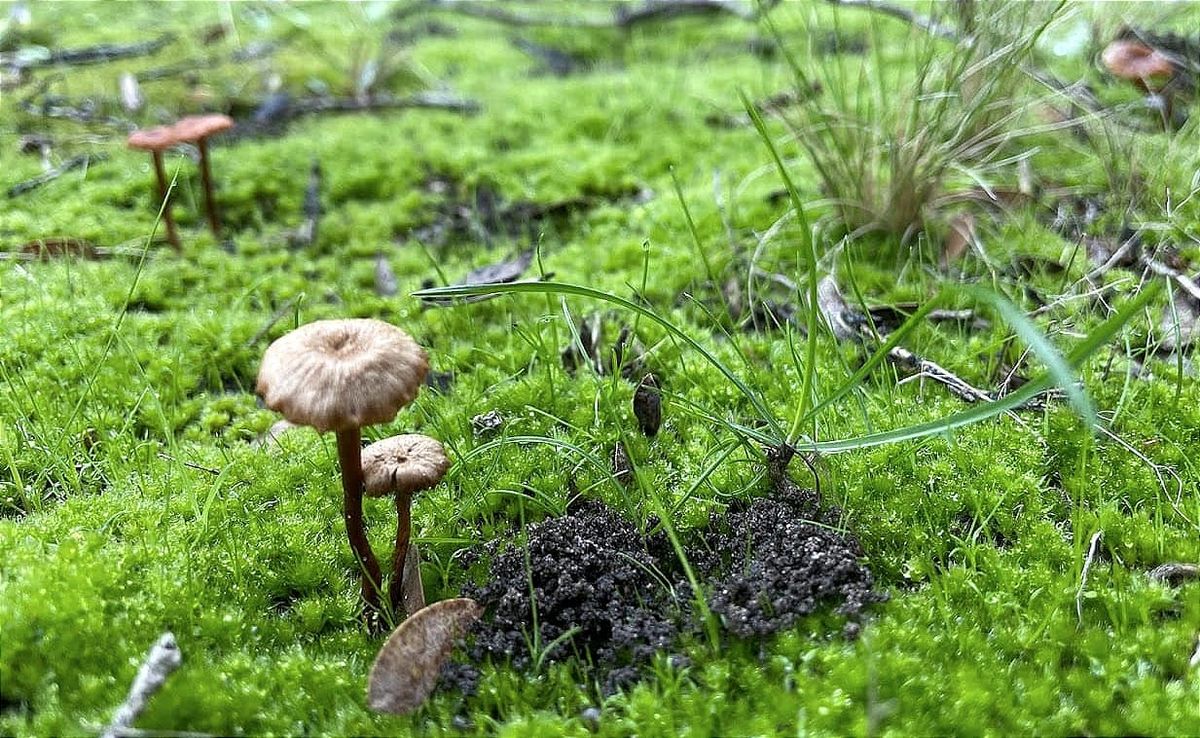
“That nothing is mere or only…”
The first line of David Malouf’s poem “Seven Faces of the Die” came to me as I listened to the monk known as Brother Spirit describe the connected richness of all things at a Plum Village retreat for climate change and nature advocates. Nothing, he said, is just itself. When I bring my attention to the real and the present, I feel its political weight, its transformative potential. I think this is because one of the defining conditions of modernity is a troubled relationship with the real and this trouble has shaped politics, common life and culture for two centuries. “Modern man,” wrote Susan Sontag, “lives with an increasing burden of subjectivity, at the expense of his sense of the reality of the world.”
I wanted, at the Plum Village retreat and afterwards, to test whether and what political implications there are in the practice of meditation and its turn to the real. By politics I mean the syntax of our common public life and how matters of collective concern are arranged – what forms we give to power, material production, cultural transmission, and the relationship of the individual to the collective. As another participant in the retreat asked Christiana Figueres, What is your theory of change? Taking up meditation has been good for my psyche, but does it have wider implications? Can the transformative promise of meditation help us make sense of our situation and choose right action? How does one enact the difference between acceptance and acquiescence?
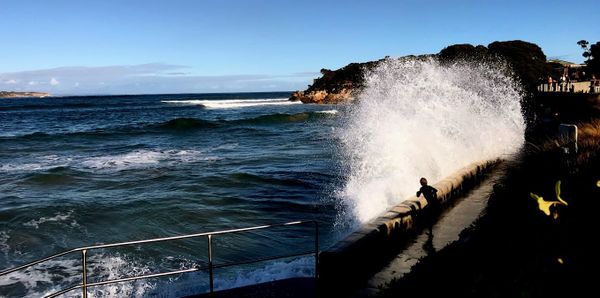
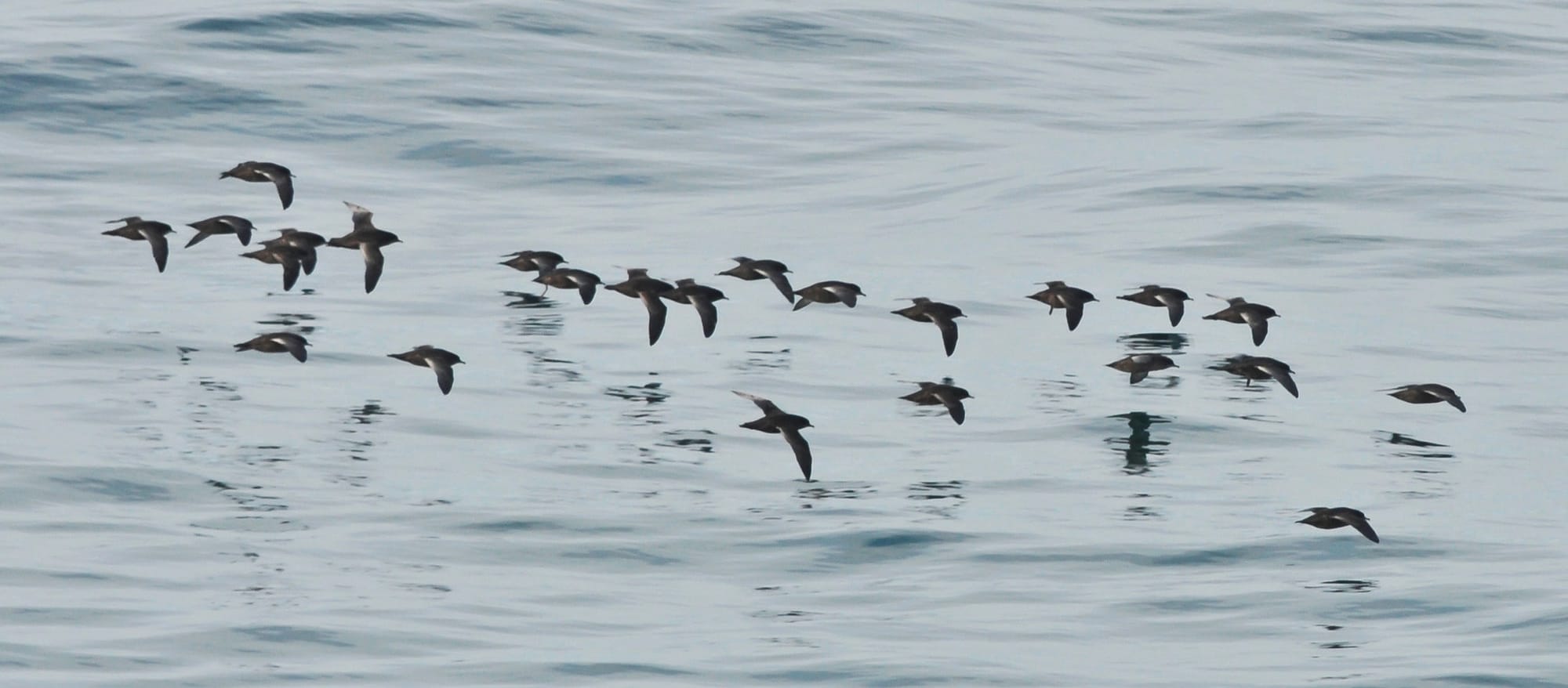
Let me begin with shearwaters. A south wind had blown up. I walked over the dune to Back Beach, Wadawarrung country, and saw a river of shearwaters cruising in scalloped motion behind the surf from east to west. They were visible, but distant; distance was crucial to the vision. In the bird-river, individuals moved in and out of sight, turning their bodies, curving up and then swinging low. They were beautiful, free and sovereign – the Taoist word is ziran, self-so, or natural. They were free not in isolation but in relationship, like the elements of an artwork, a living stream of birds in thickets of wind, following the smell of squid and skimming the surface of the water with their feet. When I see things like this, something leaps up in my body and spirit. My desire becomes a thousand metres of saltwater I cannot cross. I wish for binoculars, to see the birds more clearly. I wish for the power of flight, to be among them. I wish to write a poem, to make an offering that could intercede for them with the industrial complex that may drive them to extinction (not willfully, indifferently! Without minding). The poem I wish to write would express the vexed condition of the artist/activist in late modernity, at the onset of ecological collapse, granted a fleeting vision of the real, fluid and whole, but straining to find a syntax with which to reciprocate that vision and bring redress.
Etymologically, the zi in ziran is a nose. There is a beak of self we look out over when we’re witnessing the world. I have learned it is better not to pretend it is not there. In the Tao Te Ching, the term first appears at the end of Chapter 17, a poem about leadership. When a true leader’s work is accomplished, the poem concludes, it leaves no trace and the people say, We did it ourselves (ziran). I aspire to this naturalness in the relationship of self to collective, yet the very condition of aspiring seems to widen the thousand metres of distance. Likewise, the distance between my people and the world we inhabit is infinite and it is a mere trick of the mind. Aptly, the word mere itself expresses this. It is a contranym. Its earlier meaning was pure or entire. A mere bird was nothing less than a bird, a bird in its fullest sense, but the word developed a wholly opposite meaning, as words tend to do. Now a mere bird has become nothing more than a bird, a paltry thing.
Speaking of the world’s fluid syntax, David Malouf lived long enough to fall in with it, moved slowly enough and paid sufficient attention to his breathing to recreate it in his late poems. Here are the first four stanzas of “Seven Faces of the Die:”
That nothing is mere or only.
That not even white, seen
rightly, is without
its heat zones, gradations
of red, yellow, green,
or snow without its blue
occasions when birds fly
over, or skies change their thoughts,
to say nothing
of mind, its happy knack
of changing as it changes things
or warms to the matter.
Finding in breath
and sound-stuff much
that is more, not mere, and many,
not only.
“Seven Faces of the Die” is a poem in seven parts about hazard, chance and impermanence. A die only has six faces, so I have long imagined the seventh face to be the last mystery: we die. Malouf’s poem is a close reading of the real akin to meditation. The sound and weight of each word in relation to its neighbours and the sense they make in arrangement is finely wrought. That is syntax. Nothing is mere or only, he writes, and the poem embodies this insight, being nothing more or less than full of small weighty words connected by fibres of meaning. The first line, a single sentence, is short and pregnant, ziran. The following sentence begins with the same word, that, indicating we will have elaboration, then it cascades over eleven lines and three stanzas, filling with teeming variations as it warms to the matter. Malouf was a master of enjambment, the running of a phrase, or even part of a word, over a line break to create rhythmic tension and syntactical ambiguity. Words at the end of lines are tugged backwards then pulled forwards and thus their meaning unfurls. See how gradations at the end of the first stanza is at first modified by and belongs to white but is elaborated in the next line to become red, yellow and green. See how blue belongs to snow as a noun, but then thickens into an adjective for occasions and becomes the shadow of a bird or cloud. Hear how the second sentence turns, and turns again, around the breaks, but doesn’t hurry. The form of his sentence articulates his meaning: nothing is mere, it is always more, if you slow down, be present, and restore your connection to the real.
But where is the politics in this? What is it that makes meditation more than self-help and poetry more than self-expression? I say that healing the breach between modernity and reality is an urgent political project at all scales – the self, the wider community, the beyond human. Attention undertakes this project. The closer one’s attention to reality, the fuller it becomes and the less governable. Reality is gratuitous and unruly. That is a political insight. Power strips freedom from what it dominates: modernity treats the world like a patient etherized upon a table. The heterarchic forms of the real world offer contrast with the syntax of our public life, with its hierarchies of power and wealth that extend in mystifyingly long chains around the planet, affecting the lives of billions but leaving us no foothold, no traction, no visibility to intervene is what is being done to us. What is being done to us? We are also being rendered mere or only, like nature in R.G Collingwood’s definition of history:
The events of nature are mere events, not the acts of agents whose thought the scientist endeavours to trace… To the scientist, nature is always and merely a ‘phenomenon,’ not in the sense of being defective in reality, but in the sense of being a spectacle presented to his intelligent observation.” (R.G Collingwood The Subject-matter of History, 1946)
History, in this conception, is “the acts of agents” but in our own time, our acts feel inconsequential and our resistance feels like spectacle.
Since we are the world, but do not feel so, a self-conscious modern individual subject may suffer from a paralysis born of this estrangement. As he reaches for the sensual world, Antonine Roquentin, protagonist of Jean-Paul Sartre’s novel Nausea experiences his alienation from it and recoils:
Objects should not touch because they are not alive. You use them, put them back in place, you live among them: they are useful, nothing more. But they touch me, it is unbearable. I am afraid of being in contact with them as though they were living beasts. Now I see: I recall better what I felt the other day at the seashore when I held the pebble. It was a sort of sweetish sickness. How unpleasant it was! It came from the stone, I'm sure of it, it passed from the stone to my hand. Yes, that's it, that’s just it – a sort of nausea in the hands.
Why does the caress of a pebble at the beach not delight, but instead revolt him? Because modernity says a pebble should not caress at all: it should be inert. It is only the human subject that acts, that caresses, in the modern hierarchy. And yet, it does caress him! Urgrggh! For those unaccustomed to experience and agency, contact with teeming and self-so reality can be painful, even sickening. It is an affront to the prevailing ideology which says that things, whether pebbles or people, are mere or only exchangeable commodities. Roquentin feels disgust at the agency that he intuitively feels animating the world, contrary to his social order, and this disgust introjects: he himself becomes unable to act. Drain a wetland and you’ll soon find the soil losing nutrients. Drain the world of personality and agency and it will become uncannily undead, haunting your own existence like a wraith.
Returning home to the real politically means expressing our collective life in forms that are much more local and account for the free play of particulars. It means breaking up the generalising, homogenising and unifying tendencies of power into free particulars of expression and material cooperation, the way plant roots, microbes and weather break massive boulders into fertile soil. Painting and poetry can assist. John Berger wrote that “Reality is inimical to those with power.” The invisible long chains of power rely on mystification and dazzle for their maintenance. Berger also observed that all modern artists have thought of their innovations as offering a closer approach to reality, as ways of making reality more evident. To the extent that the status quo is maintained by veiling reality, such art is inherently political. Again, by political, I do not mean championing one team or another within modernity’s established arrangements, but experimenting with the forms of everyday public life itself and developing a different syntax altogether.
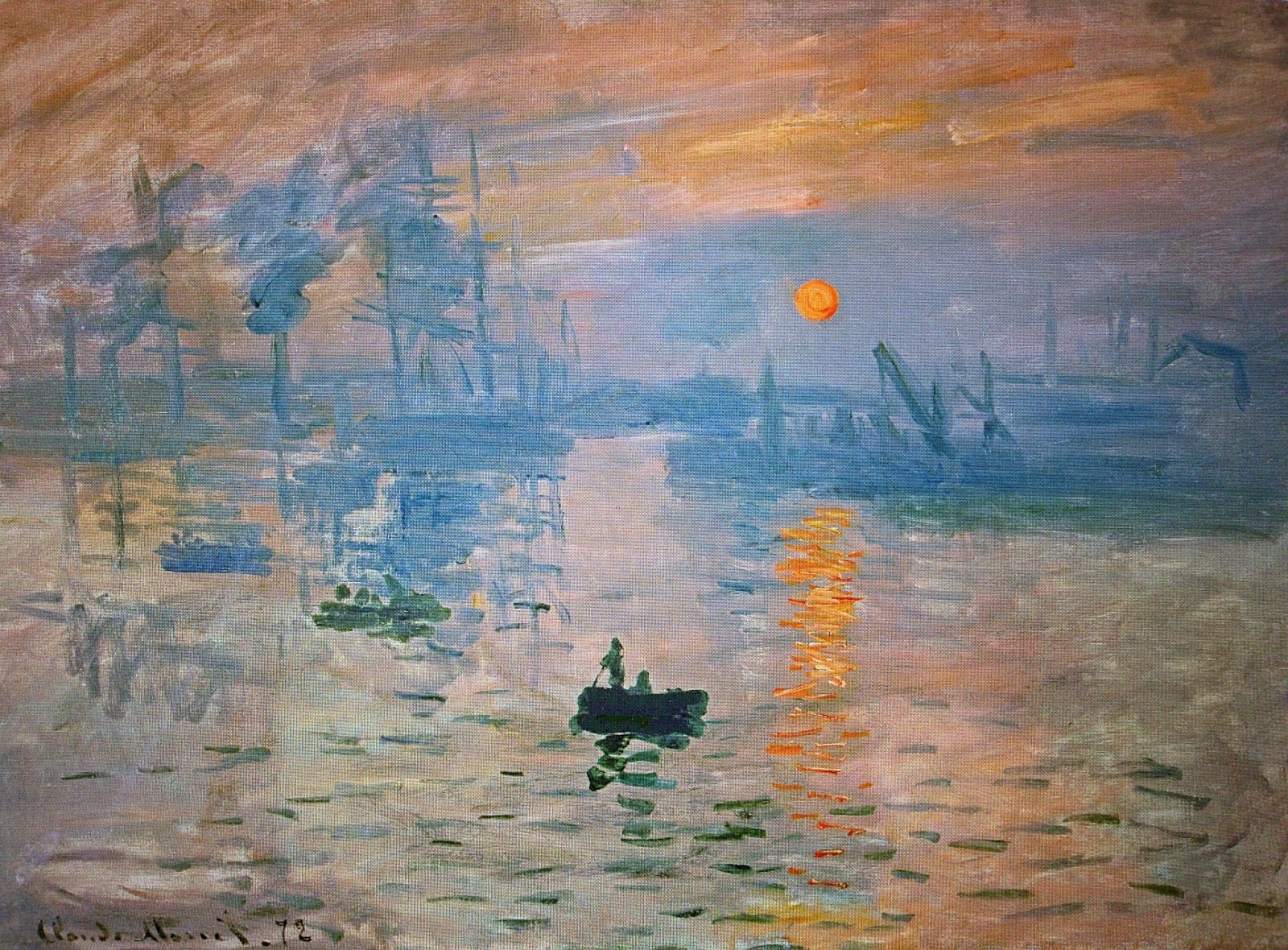
What is it about modernity that has prompted artists to pursue such a project? What is it that makes reality feel distant and unattainable, like shearwaters cruising out of reach offshore and that made closing this gap an obvious project art must should pursue? Berger called Monet’s Impression Sunrise, “an image of homelessness.” He observed its hurried strokes of paint its exposed canvas and reflected:
You do not have to have an impression of a scene with which you feel yourself to be longstandingly familiar. An impression is more or less fleeting; it is what is left behind because the scene has disappeared or changed.
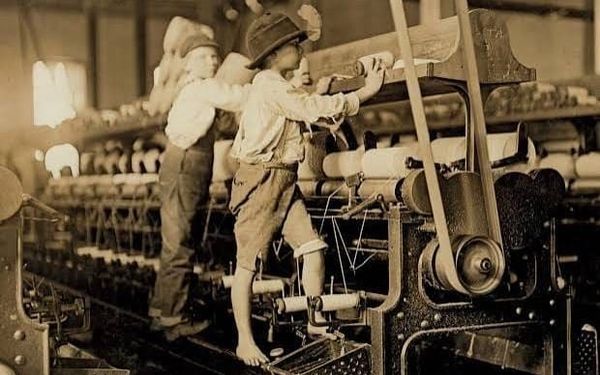
Modernity’s pace makes homelessness and its pace is not incidental. The pursuit of endless growth requires that all scenes, landscapes and ways of life continually renovated. Material life must be always in a state of demolition and refashioning in the name of development, progress and the future. We feel like tidepool communities striving to hold fast in the hurly burly of the shore as waves of change crash around us. Walter Benjamin called this effect the poverty of experience of modernity. Experience is what the elderly offer the young when they tell a yarn or a fable. They are saying I have been through the challenges you face and here is what I have learned about them that I now share with you. But when nothing remains of the world in which you grew up, experience becomes flimsy nostalgia, of no value to the young. Experience cannot be passed on in an unrecognisable world.
The poverty of experience that gave rise to Impressionism is the same lightness of being that Milan Kundera labelled unbearable. In the unrelenting revolutions of modernity, life is provisional, continuity tenuous. People say, of their most intense experiences, it was like a dream. Tourism advertises itself as making memories: the experience of your life consigned to an irrevocable past, even before it occurs. Benjamin cites the silence into which men returning from World War One descended as a symptom of this poverty:
A generation that had gone to school in horse-drawn streetcars now stood in the open air, amid a landscape in which nothing was the same except the clouds and, at its center, in a force field of destructive torrents and explosions, the tiny, fragile human body.
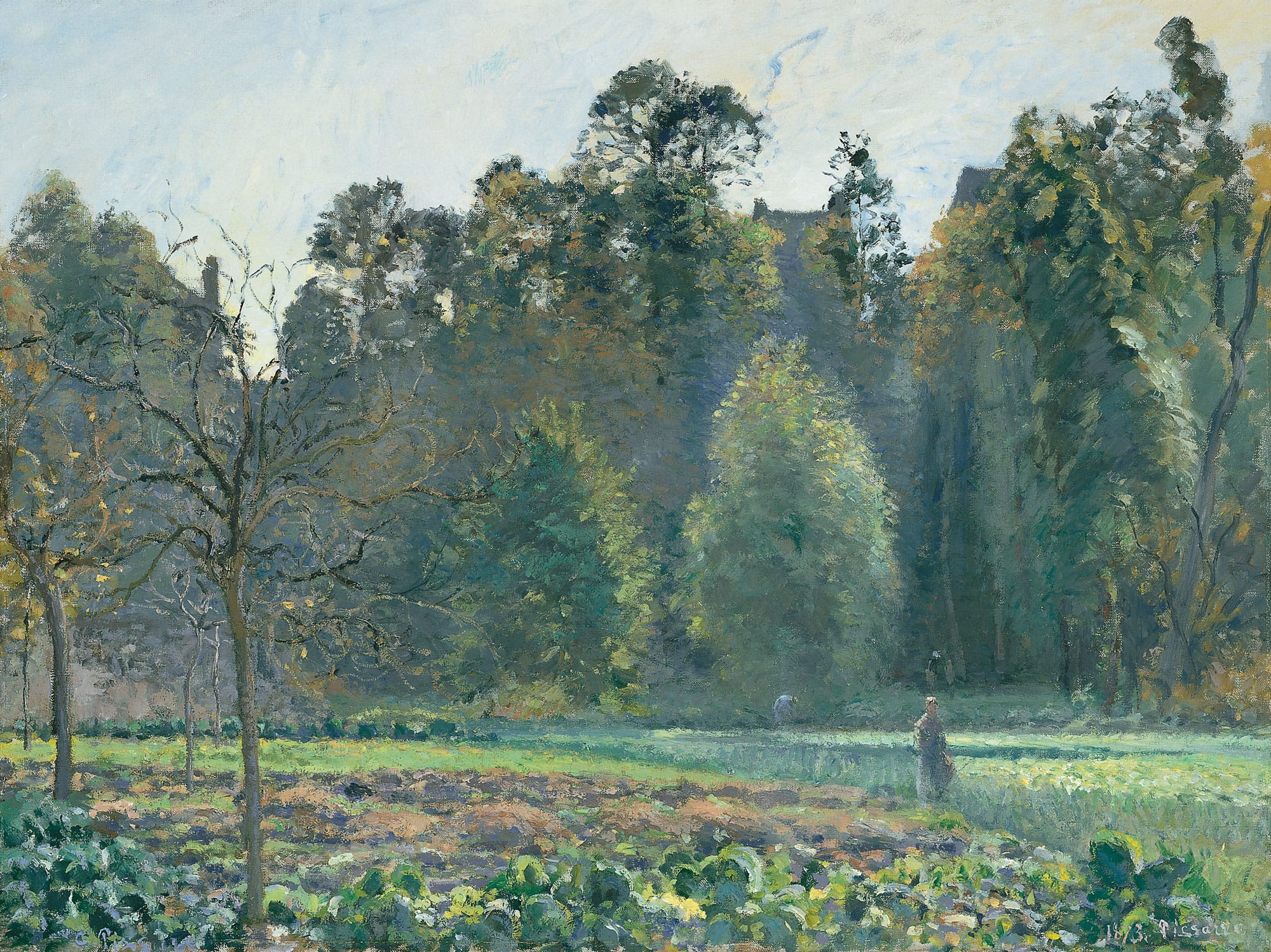
Painting and poetry have grappled with these destructive torrents and how to connect to the substrate of the real. T.J Clark observes the rapid strokes of the Impressionists in Pissarro’s Le Champ de choux and finds a kind of home in it, in the teeming present. The present, however momentary, is replete, not scanty. The artist’s fast moving hand and eye connects with an unbearably hasty world as it changes around the witness, anchoring both in its turning reality. In the stillness of contemplation, the painting makes arrival in an unhurried and expansive present possible. And in this expansive present, there is community. Clark cites Cezanne’s reflection about the connection between Pissarro’s method and his politics: “Inquiry modifies our way of seeing to such an extent that the humble and colossal Pissarro finds himself justified in his anarchist theories.” Clark elaborates:
Personal freedom is a given for Pissarro; but his anarchism does not seem to have been built around the idea of an irreducible ego. It was founded more on a confidence in commonality, in the world as a thing to be shared. The individual and the commonplace in experience go together: that is Le Champ de choux’s message. Here is the world as we know it, ordinary through and through; and the world as it never has been before, and never will be again. I take it that Cézanne was right in believing that freedom and openness of handling in Pissarro was bound up with a theory of politics.
The sixth part of Malouf’s “Seven Faces of the Die” is its shortest. It also brings the present to mind and presence of mind as a political category (to borrow another phrase from Benjamin via Clark). It is called “The Wager:”
In the air a flipped
coin (and so many
breaths suspended on it)
that never comes down.
Our situation now, the beginning of the end of modernity, feels uncanny for many because the long cherished horizon of the future lies in ruins and we no longer want to get there. The future has always been modernity’s spiritual orientation. It is crucial to the progressive mindset, to artistic avant gardism, and to mainstream bargains like “work hard for your retirement.” It is crucial to the ethos that says we must suffer or cause suffering today in order to create something better than what we have. It has also been crucial to climate advocacy. In the practice of meditation, the present swells and fills with so many breaths suspended on it that it seems possible that the coin will never come down. If the coin does not fall, the possibility of ruin or utopia does need not be determined. The future can be abolished altogether and we can return to the present. Gladness, liberty and clarity are all made possible when this happens, but the landing is dangerous. If we are not making sacrifices in service of a never-arriving future, what are we standing for, right now? Being present means articulating a politics that compellingly differentiates acceptance—which is our liberation—from acquiescence, which condemns us all.
Seen from far away, the shearwaters make a whole, silent spectacle. Close up among them there is stink, clamour and chaos. The closer one’s attention, the more realities proliferate and the more there is for politics to accommodate. This is a good thing. Among all these beaky squabbling selves, action that is loving, connected and heterarchic could be likewise so clamorous that it becomes a movement with which modernity and its power holders must reckon. The turn to the real is fruitful because, like close study of poetry and artwork, or like peering into a rockpool for an hour, it multiplies both agents and their connections. Abolishing the future and returning to the real in the present makes it possible, I think, to cultivate the selfhood necessary to intervene in our situation now and believe in the necessity and goodness of your actions, not as stratagems or theatre, not as means to ends, but as reconstitution of the world. The task is two-fold: firstly, through painting, poetry, meditation or otherwise make reality accessible to all. That way each of us may become agents to be reckoned with. Secondly, in the process, produce a politics that is capable of undertaking that reckoning. Many sins are committed in the name of the future, in treating the present moment and everyone in it, including yourself, as mere or only material for the making of that unreal dream or ruin. By bringing our gaze to the present, we become agents of a politics that offers people and the non-human world what it wants and needs right now: joy, care, comradeship. This is a much more attractive invitation than insisting that sacrifices must be made for the sake of a future no one believes in anymore.